


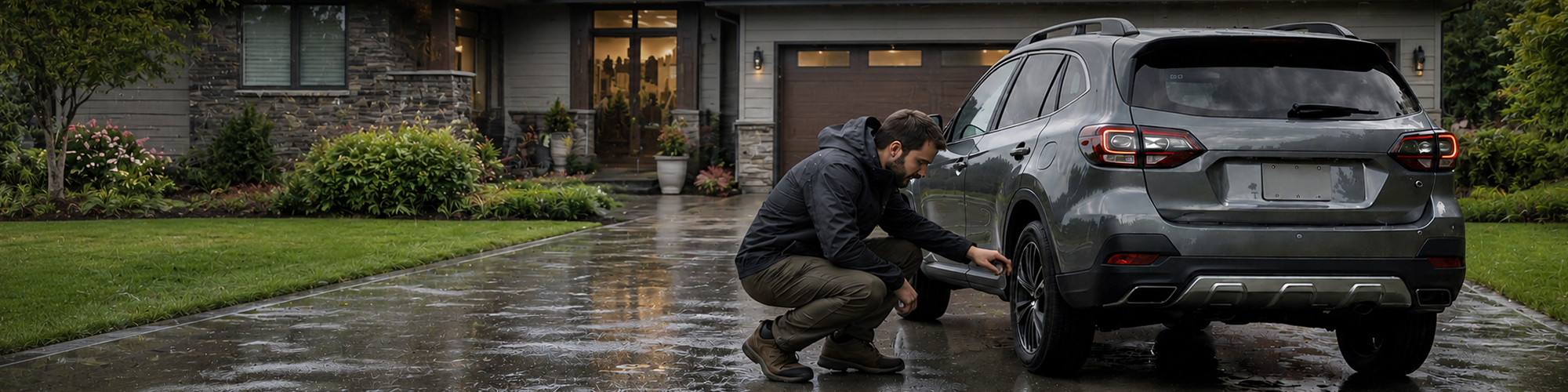
Before Fall Arrives: 5 Tire Checks Every Driver Should Make
The change from summer to fall is a good time to look beyond the tread and give your tires closer inspection. A few simple inspections can help you spot potential issues and prepare for the wetter, cooler roads ahead.
1. Check the Tire Pressure
As temperatures drop, so can your tire pressure. A common rule of thumb is that tire pressure changes by about 1 psi for every 10°F (5.6°C) change in temperature, making the transition from summer to fall a good time to check your tires.
Check pressure when the tires are cold and use the recommended pressure listed on your vehicle’s door-jamb label or in the owner’s manual. It is especially worth checking before a long road trip.
2. Inspect the Tread Depth
Fall often means more rain, making tread conditions especially important for wet-road traction. Check the tread across the tire and look for uneven wear, bald spots or areas that appear more worn than others.
As a general safety benchmark, tires should be replaced when the tread reaches 2/32 of an inch (1.6mm), which is also where built-in treadwear indicators are located.
3. Look for Signs of Damage
After a summer of potholes, road debris, construction zones, and long-distance driving, your tires may have picked up more than just miles. Take a close look at the tread and sidewalls for cuts, cracks, punctures, bulges, or other visible damage.
Also, don’t ignore changes you can feel while driving. New vibrations, unusual noise, or repeated loss of tire pressure can be a reason to have the tire inspected by a qualified professional.
4. Watch for Alignment Issues
A vehicle that pulls to one side, a steering wheel that sits off-center, or tread that wears more on one side can all point to an alignment issue. Even a small alignment problem can cause uneven wear over time.
Take a look at your tread and pay attention to how your vehicle feels on a straight road. If something seems off, an alignment check can help address the issue before it leads to more uneven tire wear.
5. Be Ready for Changing Weather
Fall driving can mean wet highways, cooler mornings, fallen leaves, and eventually colder temperatures. The right tire for your vehicle and driving habits can make a difference as road conditions begin to change.
Pickup and SUV drivers who spend time on paved roads, gravel, or light off-road surfaces can turn to the Sailun TERRAMAX AT2 for on- and off-road versatility. Its aggressive open shoulder tread helps move water, snow slush and mud away from the tread, while deep tread sipes add traction across changing surfaces.
As temperatures begin to fall, drivers can encounter a mix of wet, cold, and wintry road conditions. The Sailun Atrezzo 4S is designed to handle these changing conditions with an asymmetric tread pattern, four circumferential grooves, and multi-siped tread blocks. Its specially formulated compound stays flexible in sub-zero temperatures, providing year-round versatility as the seasons change.
Both the TERRAMAX AT2 and Atrezzo 4S are 3PMSF certified, meeting specific performance requirements for severe snow conditions. This makes them a practical choice for drivers who want year-round versatility without switching to a delicate winter tire set. Using one set of capable all-season tires can also help reduce seasonal tire change costs and the added expense of maintaining two sets of tires.
A Little Preparation Goes a Long Way
A little preparation now can make a big difference when the weather changes. Give your tires a quick check, take care of any concerns, and you will be better prepared for the roads ahead.
Looking for more ways to get the most out of your tires? Stay tuned to the Sailun blog for more tire tips, seasonal advice, and helpful information for every season.